Showing posts with label Iran. Show all posts

Monday, October 27, 2014

CD Review: Roxanna's 'Exotica'

Roxanna
Exotica
RoxArt

Born in Iran and based in North America, Roxanna brings a classical voice to the forefront in world fusion and pop-based songs on her latest, seventeen-track release, Exotica. Roxanna's sensual voice is matched by Chris Botti's sensuous trumpet sounds backed by a fusion of pop and world music arrangements. The Latin and flamenco-tinged, "Unforgotten," is an exotic medley of sounds that evoke nothing but magic and mystery. "The Air That I Breathe" is a slow, jazzy, pop standard song with breathy vocals and swishy percussion backed by jazzy piano melodies. "Only You" begins with sparkling guitar sounds and flamenco-like rhythms. Roxanna's vocals are akin to another fellow countrywoman, Nazanin (a former Miss World). Every song is different, but they do not touch urban, dance, rock, or classical genres. Exotica is a great mix of world music styles backed with a great voice. The result is a winning combination that is highly-desirable. 5 Stars (out of 5). ~ Matthew Forss

Saturday, May 3, 2014

CD Review: Sakina's 'Roye Mi'

Sakina
Roye Mi
ARC Music

A native of Kurdish Turkey, Sakina is an Austrian and German-based singer and composer that represents the folk and traditional music of Kurdistan - a region that includes Turkey, Iraq, Syria, and Iran. The ten-track release is rich with jazzy, upbeat, and sometimes mournful melodies and rhythms that are reminiscent of mugam music indigenous to the Middle East. Sakina employs various instruments to the mix to create a rich sound and highly-textured musical outcome. Some of the instruments you will hear include the German flute, guitar, violin, cello, bass, drums, oboe, piano, bilur, kemane, duduk, qanun, tembur, zurne, davul, and arbane. The music drifts into various regions across the Middle East and Central Asia with ease. The beautiful instruments, heartfelt vocals, and excellent musical delivery makes Roye Mi a winner all-around. It is the quintessential work of Sakina's being. ~ Matthew Forss

Saturday, December 7, 2013

CD Review: Kevin Seddiki and Bijan Chemirani's 'Imaginarium'

Kevin Seddiki and Bijan Chemirani
Imaginarium
World Village

With ties to France and Iran, Kevin Seddiki and Bijan Chemirani know how to bring us candid, pleasant, and globally-inspired, acoustic music. Kevin is a guitarist, percussionist, and zarb player. Bijan is also a percussionist with specialties in zarb, daf, udu, saz, and others. The thirteen tracks reflect an instrumental blend of Mediterranean, North African, and Central Asian melodies that are very ear-pleasing, while some are quite catchy. The casual music is imaginative, which probably stems from the aptly-titled album name. There are plenty of sonic embellishments that are experimental, creative, and visionary. There are some fast vocals on "On Saturn's Rings." Otherwise, the album is virtually void of vocals. The light music is perfect for relaxing, cafes, and lounging. Kevin and Bijan are truly inventors of a global sound that is anything but dull. ~ Matthew Forss

Thursday, August 15, 2013

Edmonton Folk Music Festival 2013 - Worlds of Music

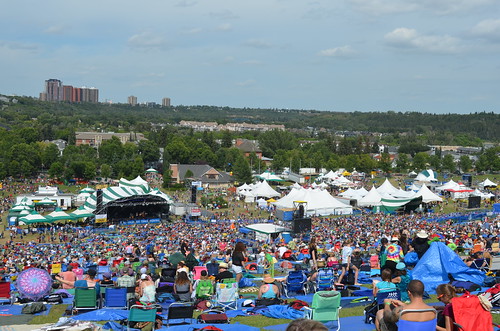
EFMF 2013 - Scenic Shots

This year's Edmonton Folk Music Festival once again presented a huge variety of folk, blues, Worldbeat, and fusions of these genres and more. For me, a highlight is discovering new sounds from around the World as well as up and coming talent.
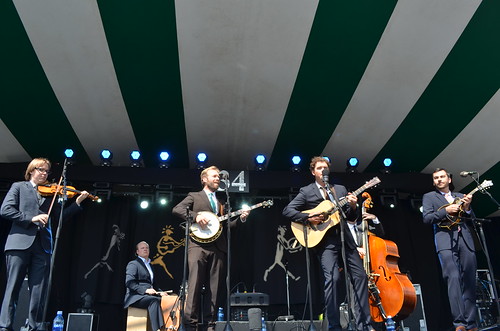
Steep Canyon Rangers - EFMF 2013

The Steep Canyon Rangers was probably my discovery of the weekend. The Grammy-award winning bluegrass band fuse country and folk into their lively music.
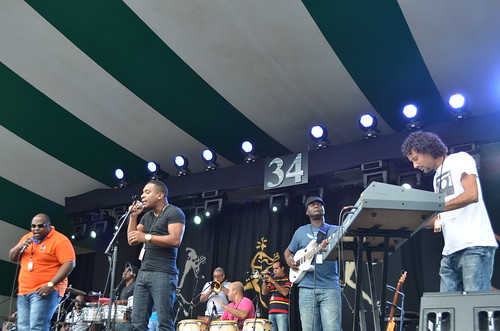
Havana D'Primera - EFMF 2013

Havana D'Primera, from Cuba, presented an exciting main stage show on Sunday afternoon. The Salsa beats were contagious and I had a hard time stopping myself from getting up to dance right there in the photo pit!
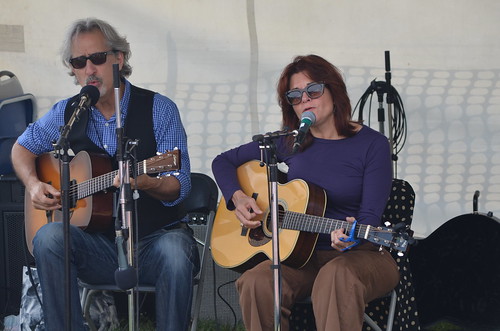
EFMF 2013 - Rosanne Cash

Sometimes the most memorable performances don't happen on any of the stages. Here is Rosanne Cash playing at the CKUA booth. She has such a beautiful voice and her songs are haunting.
EFMF 2013 - Alex Cuba

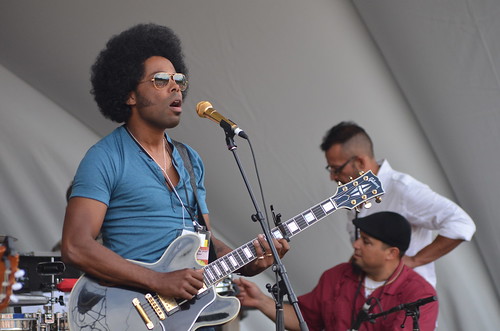
I have seen Alex Cuba a number of times at the EFMF and he always attracts a huge crowd. When he started to play his signature song "Si Pero No" people danced and sang along - it really is a great song that I never get tired of!
EFMF 2013 - Niyaz

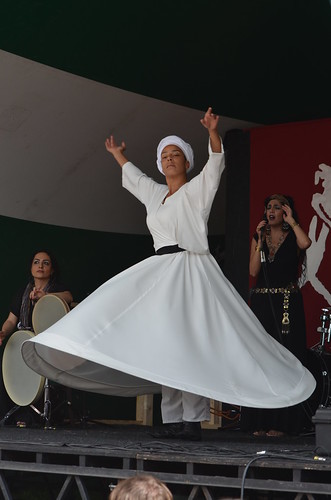
Niyaz, from Iran, was absolutely mesmerizing. The multi-faceted performance included traditional instruments, vocals, dress, and dance. There were even a few belly dancers in the audience!
EFMF 2013 - Makana

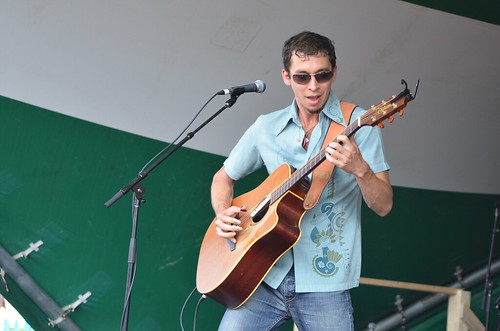
Makana totally changed my view of music from Hawaii. Noted as a slack key guitarist, this guy can really play! He is also an activist and enthralling performer.
EFMF 2013 - Amy Helm

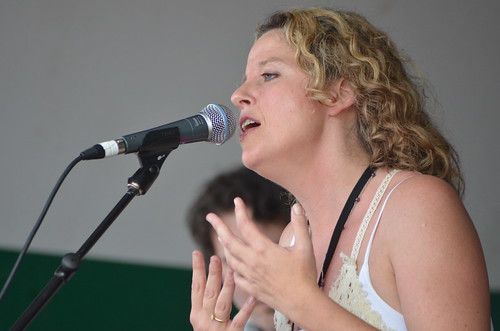
Don't accuse Amy Helm of resting on the laurels of her famous father, the late, great Levon Helm. Her performance is full of passion and she has an incredible voice.

EFMF 2013 - Joe Nolan

On the local front, Edmonton singer/songwriter Joe Nolan is someone to watch out for. His memorable songs and unique delivery are just some of the reasons why he just landed a deal with Canadian label Six Shooter Records.

DSC_2111

Tim O'Brien was on my must-see list this year. His abilities on guitar and fiddle with his signature bluegrass style translated very well on Stage 2.

EFMF 2013 - Dick Gaughan

Scotland's Dick Gaughan is another performer I have seen multiple times at the EFMF and I always enjoy his storytelling through song.
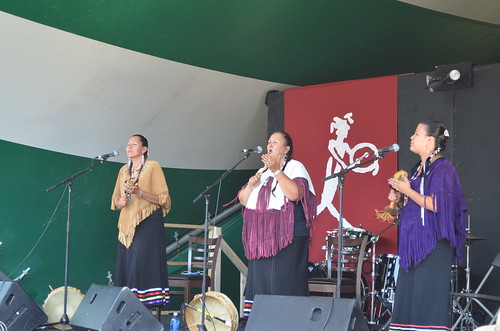
Iskwew Singers - EFMF 2013

I love music from Canada's First Nations, so I was excited to catch the performance from the Iskwew Singers. A trio of three Cree women from British Columbia, the group performs songs in the plains tradition, telling stories of connection to the earth, Creator, and each other.

The EFMF is always a memorable event and this year was no different. To see my full collection of photos, including performers, people, and various shots around the festival site, click here. ~ Paula E. Kirman

Friday, September 14, 2012

CD Review: Mahsa Vahdat & Mighty Sam McClain's 'Love Duets Across Civilizations - A Deeper Tone Of Longing'

Mahsa Vahdat & Mighty Sam McClain
Love Duets Across Civilizations - A Deeper Tone Of Longing
KKV

Iran's Mahsa Vahdat and America's Mighty Sam McClain bring us a new album of musical poetry inspired by the poetry of Mohammad Ibrahim Jafari and Erik Hillestad. The music is bluesy and classical with both Farsi and English vocals. The instruments are varied, including acoustic/electric guitars, Fender Rhodes, harmonica, piano, trumpet, ney, kamancheh, vibes, and double bass. The session songs are more adventurous and textured than previous releases from Mahsa Vahdat. Nevertheless, the contemporary music arrangements on "When You Came" are rooted in blues, jazz, and Central Asian music. The nine other tracks are a mix of soul blues and Central Asian music, which is a treat, as it is very well-composed with a favorable, long-lasting result. In short, two acclaimed and talented musicians bring us an album that is worth listening to over and over again. You will love it! ~ Matthew Forss

Friday, September 7, 2012

CD Review: Shahrzad Sepanlou's 'Yek Rooz'

Shahrzad Sepanlou
Yek Rooz (One Day)
Self-Release

Born in Tehran, Iran and based in California, Shahrzad Sepanlou is a talented musician and vocalist that incorporates piano, percussion, bass, bouzouki, sax, and keyboards on her latest release, Yek Rooz. The jazzy, contemporary music is sung in Persian, but the instrumentation is top-notch throughout. There are hints of classical, jazz, and pop sounds indicative of Azerbaijan and Armenia, too. The Central Asian songstress is joined by Faramarz Aslani on "Maa." The musical arrangements of "Komakam Kon" are particularly enthralling, because the piano, emotive vocals, and ambulating percussion are classy and nostalgic with a modern twist. The music is not overly-showy, but the dance beat of "Che Konam" and electric guitar on "Ghazal Foroush" reflects a more youthful ambiance. Yek Rooz has everything for the discriminating listener--soft melodies, sensual vocals, dance beats, and reflective instrumental sections. Fans of Persian popular music should check out Yek Rooz today! ~ Matthew Forss


Friday, August 24, 2012

CD Review: Persian Azeri Trio's 'Persian Azeri Project: From Shiraz To Baku'

Persian Azeri Trio
Persian Azeri Project: From Shiraz To Baku
ARC Music

The Persian Azeri Trio consists of Iran's Pejman Hadadi on percussion and Hamid Motebassem on tar and setar. The kamancha is played by Azerbaijan's Imamyar Hasanov. Together, the trio perfect traditional modes of musicianship for a completely acoustic concoction of melodic modes, folk dances, and improvisational forms. The wholly instrumental works provide a perfect environment for each instrument to shine through and sound harmoniously with each other. There are plaintive moments, as well as more up-beat tempos that take on Central Asian charm. The efficient playing styles and instrumental arrangements are well worth a listen. Be careful; as the instrumental tones are addictive. Liner notes are in English and German. This is the sound of the Silk Road. ~ Matthew Forss

Thursday, May 24, 2012

CD Review: Niyaz' 'Sumud'

Niyaz
Sumud
Six Degrees

The modern arrangements of the Persian group Niyaz are steeped in Persian, Kurdish, Afghani, Palestinian, and Turkish folk songs. The contemporary arrangements on keyboards, electronics, drums, and percussion are due to the talented Carmen Rizzo. Azam Ali is the vocalist, but she also plays the santoor and assorted percussion. Loga Ramin Torkian plays saz, robab, kamaan, djumbush, lafta, guitar, and viol. The stunning compositions are modernized, but not so much they are diluted with boring or cheap embellishments. Instead, the result is a catchy, moving, and ear-friendly approach to folk music. The popularized result is not devoid of folkish charm. Sumud, which means 'steadfastness' in Arabic, is appropriately-titled. Sumud will astound, amaze, and awe-inspire all who listen to it. ~ Matthew Forss

CD Review: Mahsa & Marjan Vahdat's 'Twinklings Of Hope'

Mahsa & Marjan Vahdat
Twinklings Of Hope
KKV

Mahsa & Marjan Vahdat are back at it again with poems, lullabies, and folk songs from Persia and backed by the ney, setar, daf, percussion, and vocals. The Persian melodies are folkish and evocative. The end result is a classical approach to Persian sensibilities. The instrumentation works together quite well with all of the instruments showcasing their brilliant qualities equally. There are poems by Hafez, Rumi, Hooshang Ebtehaj, Mohammad Jafari, Attar, and Esfehani. There are eleven tracks in all. Fans of Azeri, Persian, Central Asian, Middle Eastern, and classical music will love the music of Mahsa & Marjan Vahdat. ~ Matthew Forss

Thursday, February 23, 2012

CD Review: SoSaLa's 'Nu World Trash'

SoSaLa
Nu World Trash
DooBeeDoo Records

SoSaLa is Sohrab Saadat Ladjevardi, a native Persian, who has lived all over the world. As a composer, saxophonist, and music editor, SoSaLa incorporates Central Asian rhythms and instrumentation with free jazz elements and passionate vocals instilling a sense of peace and unity in Iran and throughout the world. Based in New York, SoSaLa seems to have not only acquired the native influences, but the North American styles of jazz, world music, and improvisation are also evident throughout the album. The music is not particularly modern, but it contains whirling rhythms of folk, jazz, and Mediterranean/Middle Eastern music. SoSaLa's primary vocal delivery is related to spoken word--mostly observed in poetic artforms. At any rate, SoSaLa's poetry fills the album with thoughtful ideas and personal observations that fit nicely amidst a backdrop of percussion, strings, and sax. ~ Matthew Forss

Friday, January 27, 2012

CD Review: Kayhan Kalhor & Ali Bahrami Fard's 'I Will Not Stand Alone'

Kayhan Kalhor & Ali Bahrami Fard
I Will Not Stand Alone
World Village

The prominent Iranian composer and musician, Kayhan Kalhor, combines meditative and adventurous compositions on a new instrument—the shah kaman—along with Ali Bahrami Fard’s bass santoor. The earthy sound of the shah kaman resembles a darker version of the kamancheh, though it is similar in appearance. The floating melodies of shah kaman and bass santoor elicit dreamy images of Persian classical music that is reinvented for a new generation. Keep in mind, only shah kaman and bass santoor instruments are included on this album. Technical wizardry and vocals are nowhere to be found. The interplay between the shah kaman and the bass santoor come to a head on “The Laziest Summer Afternoon.” At times, the music is complex and frenzied. However, it is interspersed with quieter moments that really grab the attention of listeners. The entire album is about one-hour long with tracks ranging in length from under two-minutes to fourteen-minutes. At any rate, the Persian music listener will find solace in the punchy notes of the bass santoor and the earthy gliding of the shah kaman. ~ Matthew Forss

Thursday, December 8, 2011

CD Review: Lawson Rollins' 'Elevation'

Lawson Rollins
Elevation
Infinita Records

Innovative guitarist and keyboardist, Lawson Rollins, returns with another astounding album of world fusion and avant-garde jazz on Elevation. Rollins reaches new musical heights that are engaging, warm, and cozy. The album was recorded in Nepal, the U.S., and Iran, which represents some of the ethnic elements inherent in Rollins' work. The slightly jazzy "Daybreak," resembles the laid-back and smooth-jazz tunes popular on The Weather Channel's Local-On-The-8s. Though, Rollins is not a vocalist; Elevation still retains a worldly, vocal base with sparse vocals representing the Middle East and South Asia. Nearly two-dozen musicians are featured alongside Rollins. The result is a New Age-tinged musical journey with elements of jazz, Latin American, and Indian connotations. Some of the songs are inspired by Middle Eastern poetry, while others find inspiration in the sounds of the world. Rollins definitely rises to the occasion with Elevation leading the wave of musical change across the global landscape--transforming everything and everyone in its path. ~ Matthew Forss

Thursday, September 29, 2011

CD Review: Mehdi Rezania's 'Salute To Sun'

Mehdi Rezania
Salute To Sun
Self Release

Born in Iran and based in Canada, Mehdi Rezania is a talented santur (hammered dulcimer) master highly influenced by another santur master, Ardavan Kamkar. The music is rich with sparkling tones and traditional melodies. Each song contains detailed notes on its inspiration in the liner notes in English. One such track, "A Child In A Garden," is about Mehdi sleeping in too late on Saturdays. The four, brighter musical notes mimic the phrase: "Time to get up....Time to get up..." repeatedly, even though there are no vocals. Vocals are present on "Drinking to Toos," by Hassan Kasayi. Mehdi accompanies Hassan on santur. The track is an ideal example of Persian classical music. Other vocals are on "Salute to Sun." Notably, ten tracks are listed in the liner notes, but only nine are included. Still, nine tracks contain plenty of music for the Persian classical and santur fan. ~ Matthew Forss

Wednesday, September 28, 2011

CD Review: Pezhham Akhavass 'Percussions'

Pezhham Akhavass
Percussions
Self Release

The San Francisco-based percussionist extraordinaire, Pezhham Akhavass, is a whiz at the tombak and daf. Primarily focused on Central Asian/Middle Eastern percussion, Pezhham presents us with a solo set of thirteen songs on various instruments without electronica accompaniment or vocals. In effect, the sounds of the percussion instruments are the voices of the songs. Pezhham plays the tombak, daf, damam, dosar kotan, frame drum, tamtam, finger bells, and udu. The songs are noted in rhythmic time signatures of 2/4--on up to 10/8. The Iranian dosar kotan instrument reflects Pezhham's ancestral background. The lack of vocals or additional instrumentation does not affect the musical project. Fans of Hossam Ramzy may be interested in the percussive sounds of Percussions. Pezhham does not miss a beat. ~ Matthew Forss 

Wednesday, June 1, 2011

CD Review: Loga Ramin Torkian/Khosro Ansari - Mehraab


Loga Ramin Torkian with Khosro Ansari

Mehraab


Iranian-born composer and multi-instrumentalist Loga Ramin Torkian has worked with esteemed groups, such as Niyaz and Axiom of Choice. Loga is joined by a Persian classical singer named Khosro Ansari. Khosro's voice adds a poetic and contemplative effect to some of the tracks, including "Az Pardeh," "Golzare Ashegh," "Chashme Jadu," and "Mehraab." The album's title, Mehraab, means 'shrine' in Persian. In effect, the music is the shrine of freedom from formalities, order, and confined spaces. The music is magnificently mixed by Carmen Rizzo, whom also worked with Mongolia's Huun Huur Tu on Eternal (Electrofone, 2009). Mehraab contains modern arrangements that accentuate the traditional sounds of the local instruments. Instruments as diverse as the rubab, baglama, djura, kamaan, brush, bendir, riq, shaker, darbuka, kik, tepsi, dohol, and santoor are just some of the many instruments. As a whole, the album fluctuates between haunting vocals, light percussion, jaunty strings, and electronic processing that adds a special effect to the music. If Persian, Middle Eastern, or folk music with a modern flair is what you seek, then Mehraab is an excellent choice. ~ Matthew Forss

Friday, April 1, 2011

CD Review: Azam Ali's 'From Night To The Edge Of Day'


From Night To The Edge Of Day


Iranian-born and US-based, Azam Ali, presents a multicultural recording of lullabies from around the Middle East. The spacious and subtle instrumentation are as vast as the regions the songs originate from. For instance, Azam incorporates lullabies from Azerbaijan, Turkey, Iran and Iraq. Azam's voice is steeped in tradition with a warm and tender sensibility that eschews a mystical or transcendental quality. In a similar manner, the instrumentation includes a variety of indigenous strings, percussion, and plucked instruments. Inspired by the birth of her son, From Night To The Edge Of Day is an inward journey of a calming peace and charisma that leaves every listener in awe. Ten songs and fifty-minutes of music provide a good deal of entertainment. Fans of Middle Eastern music, lullabies, New Age, and world fusion will find Azam Ali's latest release heartwarmingly appealing. ~ Matthew Forss

Friday, December 17, 2010

CD Review: Seyed Ali Jaberi's 'Psalms of Loneliness'


Seyed Ali Jaberi
Psalms of Loneliness

Iran's tanbur master, Seyed Ali Jaberi, is classically trained in Iranian folk music. Seyed is joined on rubab, ney flute, kemancheh, guitar, daf, sound effects, and backing vocals. However, a majority of the songs are entirely instrumental with little if any vocalizations. The highlight of the album is the title track. The song takes on a symphonic overtone mixed with dervish rhythms and Mediterranean spice. The opener, 'A Traveler Through The Ocean of Abstraction', is a galloping tune with some vocalizations. The final track, 'A Story Told and Benumbed' begins with the beat of the daf drum and the violin-like shrill of the kemancheh fiddle. Seyed takes on folk music with such gusto he is enveloped in it's historical grasp, but not so much so he loses sight of futuristic visions. The tanbur lights up the tracks and it definitely surprises all who listen. Furthermore, all of the tracks range from five to ten minutes in length. Experience the folk music of Seyed Ali Jaberi for yourself or that special someone. ~ Matthew Forss

Friday, October 29, 2010

CD Review: Galeet Dardashti's 'The Naming'


Galeet Dardashti
The Naming
Independent Release

The Persian-Jewish musical connections are showcased on Galeet's debut release. The Naming is a nod to bold and powerful women in the Old Testament of the Bible. Galeet sings with a great deal of emotion, seemingly bringing the Bible to life in song. With a smattering of Persian chants, Middle Eastern percussion, and Biblical quotes, The Naming encapsulates Galeet's ethnic roots of Iran and Israel, while currently based in the U.S. The distinctive Persian percussion with santur, qanun, and strings, accompany Galeet's mostly Hebrew language singing. The music seems to nicely bridge the past with the present without being overtly modern or wholly traditional. Galeet Dardashti is not as experimental as U.S.-based Iranian musician, Sussan Deyhim, or as traditional as Iran's Sima Bina or the Dasten Ensemble. Regardless, The Naming is a solid release of songs with a purpose and a past. Coincidentally, another purpose is to enjoy the music for what it is worth. It is a riotous journey of Biblical proportions! ~ Matthew Forss

Monday, October 11, 2010

CD Review: Norway Meets Iran with Skruk & Mahsa Vahdat


I vinens speil (In The Mirror of Wine)

Norway's Skruk choir and Iran's Mahsa Vahdat create symphonic songs of poetry from Sufi poets Rumi and Hafez. The songs are presented in Persian and Norwegian. The Sufi poets often combined elements of Islam, Christianity, and Zoroastrianism in their poetic works. I vinens speil draws upon the same religious influences mentioned above and it was also recorded in a Norwegian church. The mix of light percussion, bass, and piano are a perfect companion to the beautiful choral melodies and Mahsa's voice. Mahsa's angelic voice on the opening track, "Gleden Ved Ditt Kyss", sets the stage for the rest of the album. The piano is never overtly intrusive. Anyone with an interest in hauntingly beautiful church melodies, classical music, and world jazz will find the most satisfaction with Skruk & Mahsa Vahdat. Liner notes include Norwegian and Persian song translations. ~ Matthew Forss

Friday, May 21, 2010

CD Review: Ghalia Benali & Bert Cornelis


Al Palna

The Tunisian and Belgian duo, Ghalia Benali and Bert Cornelis present songs from a place of complete inner beauty. Essentially, Ghalia's classical voice and Bert's sitar work along with additional instrumentation bridging the gap between North Africa and South Asia are the result of an eclectic group of musicians from Iraq, India and Morocco. The dreamy, almost meditative quality of the instruments and sparse vocals unleash the mind's heightened states of wellbeing. The translation of 'Al Palna' is The Cradle. In that regard, the music reminds one of child-like wonderment and innocence. The musical nature of Al Palna is well-suited for fans of traditional Middle Eastern and North African music. If you are a fan of inventive sitar playing, Sufi-like and Sheila Chandra-esque vocals, then begin with the music from the 'cradle'. ~ Matthew Forss